Persian rugs and Turkish rugs are two of the most sought-after handmade floor coverings in the world. Both bring heritage, craftsmanship, and timeless style — but they differ in knot type, pattern language, colour palette, and how they feel in modern Dubai interiors.
If you are comparing a Persian rug vs Turkish rug for a villa in Arabian Ranches, an apartment in Dubai Marina, or a formal living room in Downtown Dubai, this guide breaks down the real differences so you can choose with confidence.
Carpet Dubai (https://carpetdubai.ae/) supplies authentic oriental and handmade Rugs in Dubai for homes, offices, and hotels across the UAE — including Persian-style carpets, Turkish kilims, and custom sizes with free delivery.
Shopping for handmade floor coverings? Browse Rugs Dubai at Carpet Dubai or call +971 55 472 2980 for a free consultation.
What Is a Persian Rug?
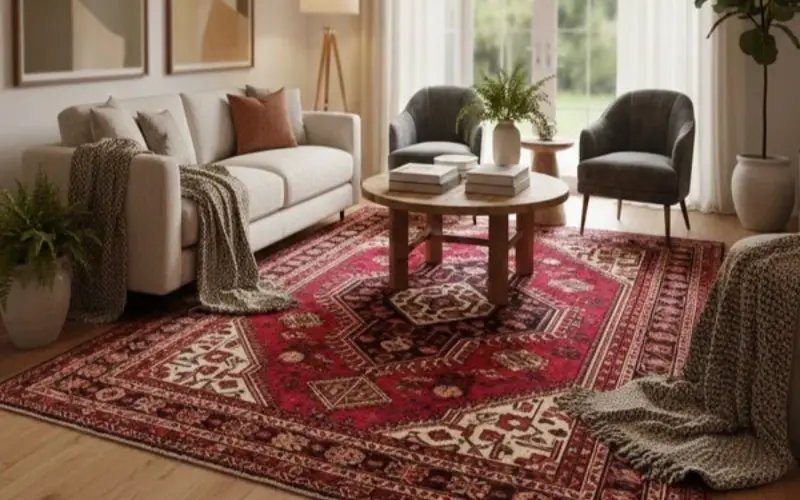
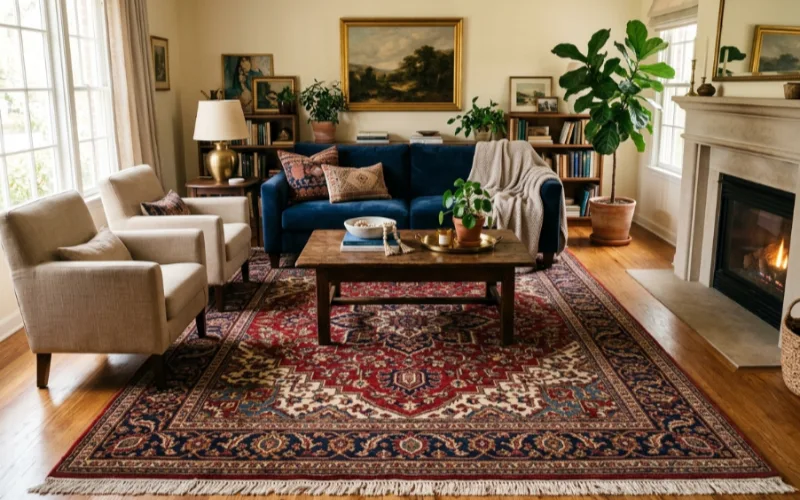
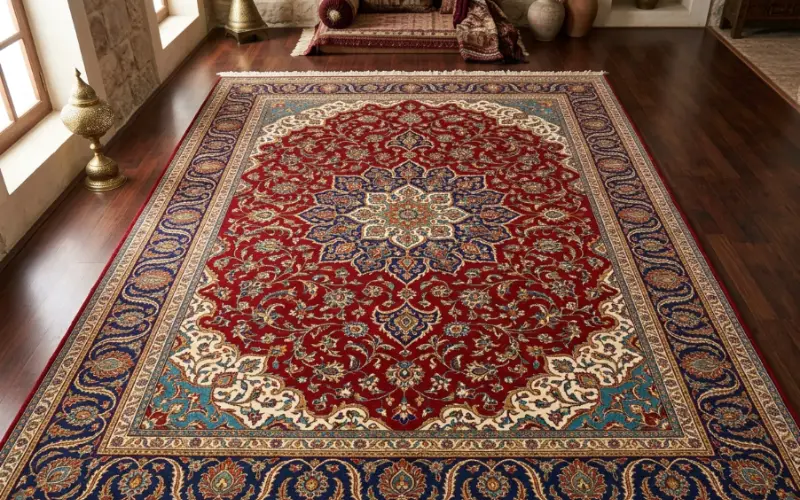
A Persian rug is a hand-knotted or hand-woven carpet traditionally made in Iran (formerly Persia). These rugs are known for floral medallions, curving vine patterns, rich reds and blues, and extremely fine knot counts.
Classic Persian rug types include Tabriz, Kashan, Isfahan, and Qom — each region producing distinct designs. Persian rugs are usually woven with asymmetric (Senneh) knots, which allow detailed curvilinear patterns that machine-made copies struggle to match.
- Best known for: floral medallions, arabesque borders, deep jewel tones
- Typical materials: wool, silk, or wool-silk blends
- Knot type: asymmetric Senneh knot
- Ideal rooms: formal living rooms, dining areas, master bedrooms, entry halls
At Carpet Dubai, our Persian rugs Dubai collection includes handmade antique and modern oriental pieces in sizes from runner to palace scale. View the range:
What Is a Turkish Rug?
A Turkish rug traditionally comes from Turkey and includes both hand-knotted carpets and flat-woven kilims. Turkish designs tend toward geometric motifs, bold medallions, star patterns, and tribal symbols — often in warm reds, terracotta, navy, and ivory.
Turkish rugs typically use symmetric (Ghiordes) knots. Flat-weave kilims — a hallmark of Turkish craft — are lightweight, reversible, and especially popular in contemporary and minimalist Dubai homes.
- Best known for: geometric patterns, kilim flat-weaves, tribal motifs
- Typical materials: wool, cotton, goat hair (kilims)
- Knot type: symmetric Ghiordes knot (pile rugs); flat-weave for kilims
- Ideal rooms: open-plan living areas, summer rooms, bedrooms, hallway runners
Carpet Dubai stocks handmade rugs including Turkish-style kilims and oriental pieces. Explore the collection:
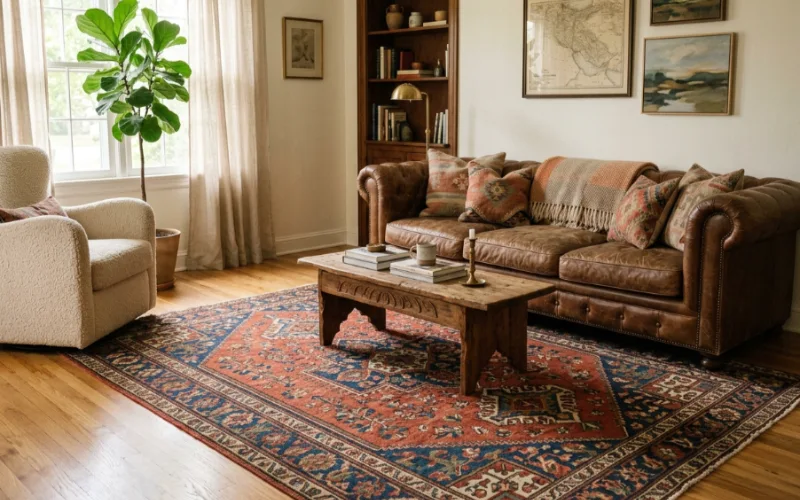
Persian Rug vs Turkish Rug: Side-by-Side Comparison
| Factor | Persian Rug | Turkish Rug |
| Origin | Iran (Persia) | Turkey |
| Pattern style | Floral, curvilinear, medallion-centred | Geometric, tribal, bold symmetry |
| Knot type | Asymmetric (Senneh) | Symmetric (Ghiordes) or flat-weave |
| Typical pile | Medium to high pile | Medium pile or flat (kilim) |
| Common colours | Red, blue, ivory, gold | Red, terracotta, navy, cream |
| Best interior style | Classic, luxury, traditional | Modern, bohemian, eclectic, minimalist |
| Weight | Often heavier (dense pile) | Kilims lighter; pile rugs moderate |
| Price range (Dubai) | AED 2,000–50,000+ depending on size and silk content | AED 800–25,000+; kilims often more affordable entry point |
| Care in Dubai dust | Regular vacuum; professional clean yearly | Kilims easier to shake and wash; pile rugs similar to Persian |
Design and Pattern Differences
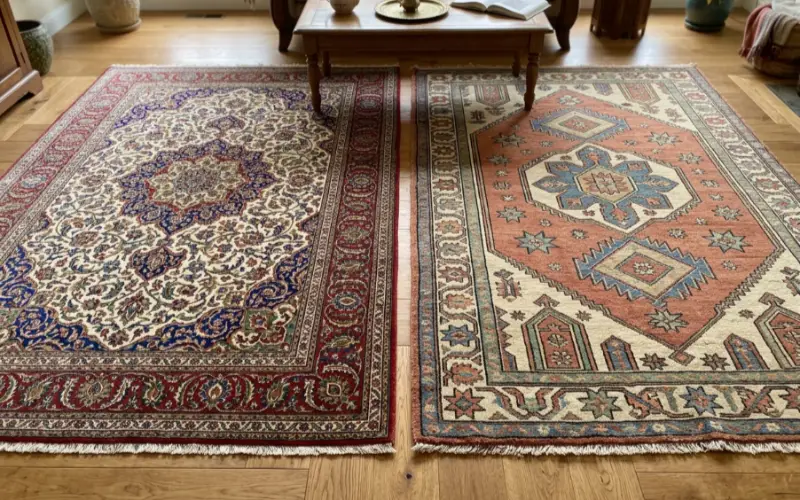
The clearest visual difference in the Persian rug vs Turkish rug debate is pattern language. Persian rugs favour flowing florals — roses, palmettes, vines, and central medallions with layered borders. Turkish rugs lean geometric — diamonds, stars, hooks, and repeating tribal motifs with strong symmetry.
For a formal Dubai living room with classic furniture, a Persian medallion rug often anchors the space. For a bright, open-plan apartment with neutral sofas and modern art, a Turkish kilim adds colour without visual heaviness.
Materials and Craftsmanship
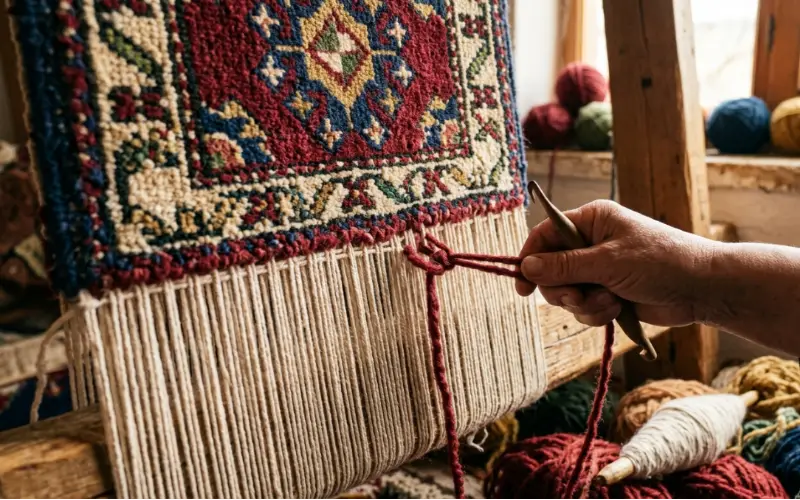
Both Persian and Turkish rugs are traditionally hand-made using techniques passed down for generations. Wool is the most common fibre for durability and softness underfoot. Silk appears in premium Persian pieces for luminous detail and higher knot density.
Turkish kilims use wool or cotton weft on a wool foundation, making them thinner and easier to layer over tile or engineered wood — common flooring choices in UAE homes. Carpet Dubai offers 100% authentic handmade rugs and can arrange custom sizes when standard dimensions do not fit your layout.
Which Works Better in Dubai Homes?
Dubai’s climate — heat, dust, sand, and year-round air conditioning — affects how you maintain any rug. Both Persian and Turkish pile rugs need regular vacuuming and periodic professional cleaning to manage dust.
Turkish kilims have an edge for easy maintenance: they are lighter, often reversible, and simpler to shake out or spot-clean. Persian silk rugs are stunning but suit low-traffic formal areas rather than busy family hallways.
- High-traffic hallway: Turkish kilim runner or low-pile Turkish rug
- Formal living room: Persian wool or wool-silk medallion rug
- Bedroom: either — Persian for luxury warmth, Turkish kilim for lighter feel
- Rental apartment: Turkish kilim (easier to move and replace)
- Villa majlis or dining room: Persian rug for traditional prestige
Need help choosing for your space? Carpet Dubai offers free samples and UAE-wide delivery on Rugs in Dubai. Call +971 55 472 2980 or visit https://carpetdubai.ae/contact/
Price: Persian Rug vs Turkish Rug in Dubai
Persian rugs generally command higher prices at the premium end — especially antique, silk, or high-knot-count pieces. Entry-level handmade Persian wool rugs in Dubai often start around AED 2,000–5,000 for medium sizes.
Turkish kilims and geometric pile rugs frequently offer a lower entry price, with quality wool kilims available from roughly AED 800–3,000 depending on size and age. Both types appreciate in value when authentically handmade and well maintained.
At Carpet Dubai, you can browse 20,000+ rug options including Persian, Turkish, Indian, and custom designs — with secure shopping and easy returns. Shop Rugs Dubai: https://carpetdubai.ae/
How to Choose Between a Persian Rug and a Turkish Rug
- Match the pattern to your furniture. Curved, ornate furniture pairs with Persian florals. Clean-lined modern furniture suits Turkish geometry.
- Consider traffic. Busy homes with children or pets benefit from durable wool Persian rugs in living areas or hard-wearing Turkish kilims in corridors.
- Think about pile height. High-pile Persian rugs feel plush but trap more dust. Flat Turkish kilims suit Dubai’s dust season and are quicker to clean.
- Set your budget. Turkish kilims often cost less per square metre at entry level. Investment-grade Persian silk rugs sit at the top of the market.
- Verify authenticity. Buy from a trusted Rugs Dubai supplier who sells genuine handmade pieces — not machine-printed copies.
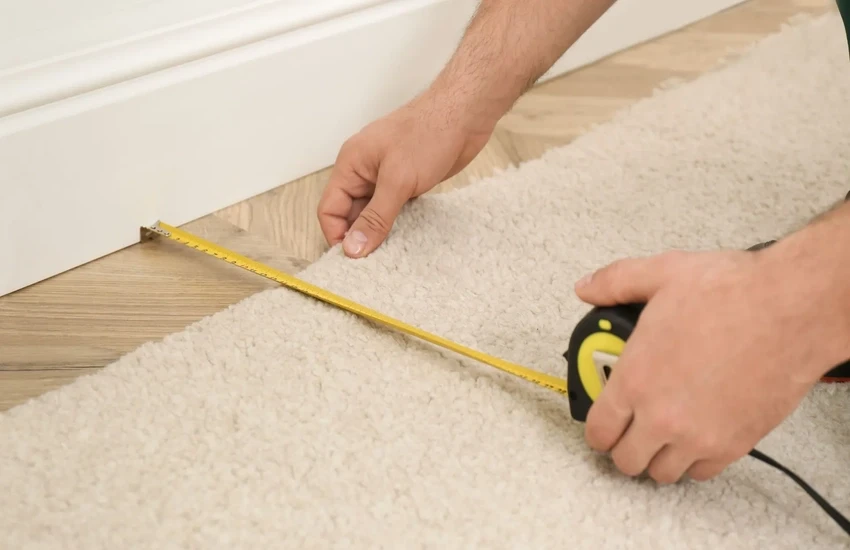
- Order the right size. Measure your seating area or dining table zone before buying. Carpet Dubai offers custom sizing on handmade orders.
Room-by-Room Recommendations
| Room | Persian Rug | Turkish Rug |
| Living room | Medallion wool rug under sofa and coffee table | Large kilim or geometric pile rug for open layouts |
| Dining room | 8×10 Persian rug under table and chairs | Bold geometric rug to define the zone |
| Bedroom | Soft wool Persian rug beside the bed | Lightweight kilim for a relaxed, airy feel |
| Entryway / hallway | Persian runner (e.g. 2×10) | Turkish kilim runner — durable and easy to clean |
| Office | Subtle Persian pattern for executive rooms | Flat kilim under desk — stable, low profile |
For living room inspiration, see Carpet Dubai’s living room carpets range: https://carpetdubai.ae/living-room-carpets-dubai/
How to Spot Authentic Handmade Rugs
- Flip the rug — handmade knots look irregular on the back; machine rugs look perfectly uniform
- Check the fringe — on hand-knotted rugs, fringe is an extension of the warp threads, not sewn on separately
- Feel the fibre — real wool has natural variation; synthetic copies feel overly uniform or plasticky
- Ask about origin — reputable sellers like Carpet Dubai label Persian, Turkish, and Indian handmade stock clearly
- Request a sample — Carpet Dubai offers free samples so you can check quality before a full purchase
Frequently Asked Questions
Q: What is the main difference between a Persian rug and a Turkish rug?
A: Persian rugs typically feature floral, curvilinear patterns woven with asymmetric Senneh knots. Turkish rugs favour geometric and tribal designs, often using symmetric Ghiordes knots or flat-woven kilim technique.
Q: Are Persian rugs better than Turkish rugs?
A: Neither is universally better. Persian rugs suit classic, luxury interiors. Turkish rugs and kilims suit modern, minimalist, and high-traffic spaces. The best choice depends on your room, budget, and maintenance preference.
Q: Which rug is easier to clean in Dubai?
A: Turkish kilims are generally easier to maintain — lighter, often reversible, and simpler to shake and spot-clean. Both pile types need regular vacuuming in Dubai’s dusty climate.
Q: How much do Persian and Turkish rugs cost in Dubai?
A: Turkish kilims often start from AED 800–3,000 for medium sizes. Handmade Persian wool rugs typically start around AED 2,000–5,000, with silk and antique pieces costing significantly more.
Q: Where can I buy Persian and Turkish rugs in Dubai?
A: Carpet Dubai stocks authentic Persian rugs, Turkish-style kilims, and handmade oriental rugs with UAE-wide delivery. Browse Rugs in Dubai at https://carpetdubai.ae or call +971 55 472 2980.
Q: Does Carpet Dubai offer custom rug sizes?
A: Yes. Carpet Dubai provides custom-made rugs. You name the design and size and the team can source or produce a piece to fit your space. Visit https://carpetdubai.ae/handmade-rugs-dubai/ for details.
Conclusion
The Persian rug vs Turkish rug choice comes down to pattern preference, room use, budget, and how much maintenance you want in a Dubai home. Persian rugs deliver floral elegance and traditional prestige. Turkish rugs and kilims bring geometric character, lighter weight, and often better value at entry level.
- Choose Persian for formal, classic, and luxury spaces
- Choose Turkish for modern, bohemian, and easy-care layouts
- Buy authentic handmade pieces from a trusted local supplier
- Measure your room and request samples before committing
Ready to shop? Explore Persian rugs, Turkish kilims, and thousands of handmade options at Carpet Dubai. Visit Rugs Dubai at https://carpetdubai.ae/ or call +971 55 472 2980 for expert help.