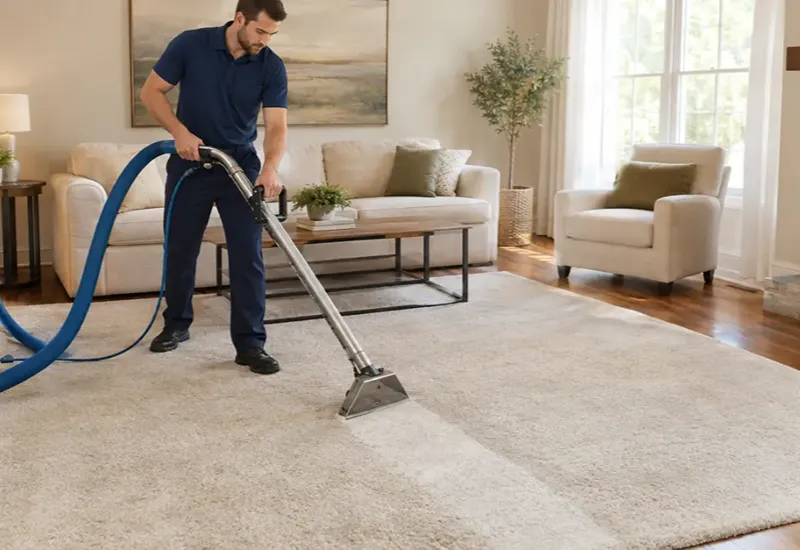
A rug in a Dubai home works harder than almost any other textile you own. It catches the fine sand that blows in through open balcony doors in October, absorbs the humidity that builds up when the AC is off for a single afternoon, takes the brunt of spilled Arabic coffee during Ramadan iftars, and ends the week visibly duller than it began. Knowing how to clean a rug at home — properly, without ruining the fibres — is one of those skills that pays for itself within the first year of ownership.
Yet most cleaning advice online is written for a generic Western audience and quietly assumes conditions that do not apply here. It assumes you can hang a rug on a garden line in spring weather, that tap water is soft, that dust is mostly lint rather than silica grit, and that a rug will air-dry in three hours. None of those assumptions survive contact with a Dubai August. A cleaning method that works beautifully in a London flat can permanently stain a rug in a Jumeirah villa, and a YouTube tutorial promising “five-minute rug cleaning” can turn a treasured Persian into a felted, bleeding mess.
This guide is written specifically for Dubai homeowners. It covers the right way to vacuum, the only safe way to spot-clean common stains, the deep-clean method for when a rug genuinely needs more than vacuuming, the rug types that should never be DIY-cleaned, and the warning signs that tell you to stop and call a professional instead. By the end you will know exactly which of your rugs you can confidently clean at home — and which ones are better left to a specialist.
1. Know Your Rug Before You Touch It

Before you reach for a single cleaning product, you need to know what your rug is made of. The fibre dictates everything that follows — which detergent is safe, how much water you can use, whether the colours will bleed, and how the rug should be dried. Cleaning a wool Persian the way you would clean a synthetic shaggy is the single most common way Dubai homeowners permanently damage their rugs.
The decision matrix below maps the rug types most commonly owned in Dubai homes to the right cleaning approach. Use it as your starting point, and if your rug does not fit cleanly into one of these categories, treat it as delicate until proven otherwise.
| Rug type | Safe to DIY clean? | Best approach |
|---|---|---|
| Wool Persian / handmade | Spot-clean only | Vacuum gently, blot spills immediately, never soak. Deep-clean by a specialist. |
| Synthetic (polypropylene, polyester) | Yes, fully | Vacuum, shampoo, even hose down outside — colourfast and water-tolerant. |
| Shaggy rug (wool or synthetic) | Yes, with care | Vacuum on high pile setting, spot-clean, air-dry flat. Never beat a long shag. |
| Cotton / flatweave (kilim) | Yes, fully | Vacuum, gentle shampoo, can be rolled and taken outside for beating. |
| Silk or silk-blend | Never DIY | Vacuum with brush off, blot spills dry only. Always professional clean. |
| Leather / animal skin | Spot-clean only | Brush, wipe with damp cloth, never soak. Professional clean for stains. |
| Vintage / patchwork | Spot-clean only | Old dyes bleed unpredictably. Treat as Persian, call a specialist for deep-clean. |
If you are unsure what your rug is made of, do the simple fibre test before doing anything else. Pull a single tuft from an inconspicuous corner (the back of the rug, hidden under furniture), hold it with tweezers over a clean glass dish, and touch a lit match to it. Wool smells like burnt hair and leaves a brittle black bead; cotton smells like burnt paper and leaves grey ash; silk smells like burnt hair but burns very slowly and curls away from the flame; synthetics melt into a hard plastic bead and smell chemical. The result tells you which row of the matrix above applies to your rug.
If you own one of the handmade rugs sold across Dubai — a Persian, a Turkish kilim, or a patchwork piece — start by browsing our handmade rugs and Persian rug collections to confirm the construction type before you begin cleaning. The product descriptions on those pages note the fibre and whether the dyes are traditional (more prone to bleeding) or synthetic (more colourfast).
2. Weekly Maintenance: The 80 Percent That Keeps a Rug Alive
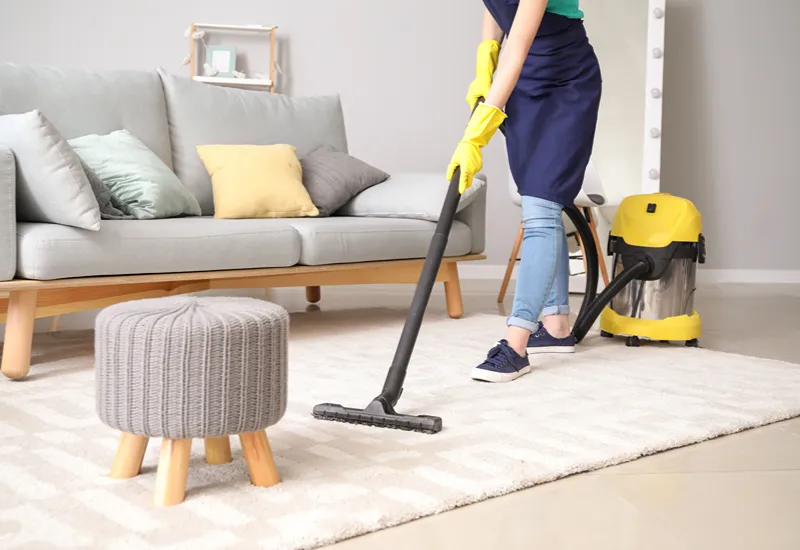
Most rug damage in Dubai is not caused by spills — it is caused by sand. The fine silica grit that blows in through open windows and balconies, walks in on shoe soles, and settles out of the air during shamal dust storms acts like a microscopic abrasive on rug fibres. Every step on a sandy rug grinds the fibres against each other, slowly dulling the surface and breaking the yarn. The single best thing you can do for any rug in Dubai is to remove that sand before it has time to work.
Vacuum the right way
Vacuum your rug at least once a week, twice a week during the dusty summer months and after any shamal. Use a vacuum with a rotating brush for synthetic and low-pile rugs; the brush lifts the embedded grit that suction alone cannot reach. For wool Persians, hand-knotted rugs, and anything with fringe, turn the brush off or use a suction-only attachment — a rotating brush will damage the fibres and pull at the fringe tassels.
Vacuum in the direction of the pile, not against it, and pass slowly — a single quick pass lifts almost nothing. For a large living-room rug, divide it into quadrants and vacuum each quadrant separately. Once a month, flip the rug over and vacuum the back too. This dislodges grit that has worked its way through to the foundation, and it is the only way to remove sand that has settled into the warp and weft.
Beat the rug, occasionally
Every two to three months, take smaller rugs outside and beat them the old-fashioned way. Hang the rug over a balcony railing or a clean line, and beat the back gently with a rug beater or a clean broom handle. You will be astonished at the cloud of fine dust that comes out of a rug that “looked clean” after vacuuming. Do not do this with a Persian or any fragile rug — the beating stresses the knots — and never beat a shaggy rug, which will shed fibre aggressively. For large rugs that cannot be moved, the back-vacuum method above is the practical substitute.
Rotate every three months
Sunlight in Dubai is harsh enough to fade rug dyes within a single year of exposure, and the fading is always uneven because only part of the rug faces the window. Rotate every rug in your home a quarter-turn every three months so the same edge is not always facing the light. This single habit extends the visual life of a rug more than any cleaning product you can buy, and it costs nothing.
Manage what comes into the room
A no-shoes policy at the door removes roughly 70 to 80 percent of the sand and dirt that would otherwise reach your rugs. Place a coarse doormat outside every entrance and a softer one inside, and encourage guests to use them. If your rug sits near a balcony door that is frequently open, consider a low-pile outdoor-style mat at the threshold to catch the worst of the blowing sand before it reaches the rug. None of these are cleaning steps as such, but they dramatically reduce how often you need to clean.
3. Spot-Cleaning: The First 60 Seconds After a Spill
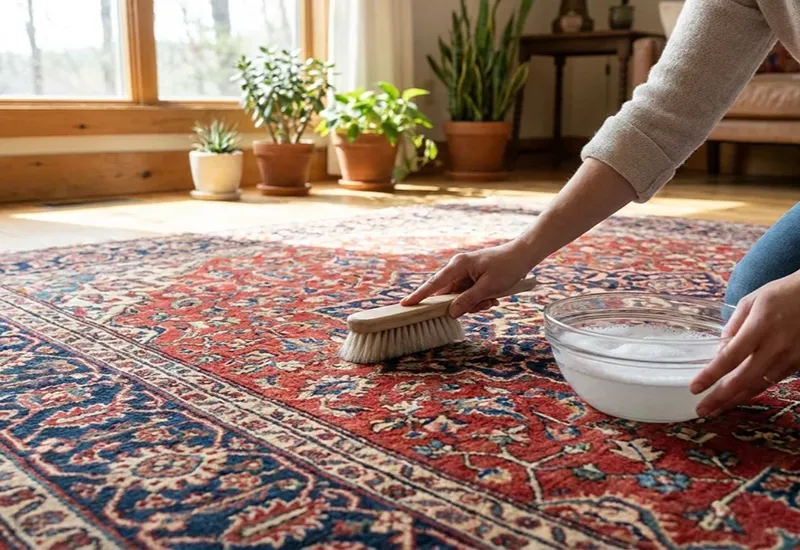
Almost every permanent rug stain in a Dubai home is the result of what was done in the first minute after the spill. The wrong first move — rubbing, scrubbing, pouring hot water, reaching for bleach — sets the stain permanently. The right first move is the same regardless of what was spilled: blot, do not rub, and remove as much of the spill as possible before it touches a fibre.
The universal first-aid sequence
First, grab a stack of plain white paper towels or a clean white cotton cloth — never a coloured cloth, which can transfer dye onto a damp rug. Second, blot the spill from the outside edge inward, pressing firmly to lift liquid into the cloth. Replace the cloth as soon as it is damp. Third, once no more liquid is being absorbed, place a clean dry towel over the area and weight it with a heavy book for ten minutes to pull out residual moisture. Only after these three steps should you reach for any cleaning solution.
The most common mistake is to rub. Rubbing pushes the spill deeper into the fibre, frays the yarn, and spreads the stain across a wider area. Even on a synthetic rug, where the fibre itself is tough, rubbing abrades the surface and leaves a permanent dull patch that no cleaning will fix. Blotting is slower and feels less satisfying, but it is the only correct motion.
Stain-specific treatments
- Coffee and tea (including Arabic coffee and karak): Blot, then dab with a solution of one teaspoon of mild dishwashing liquid in a cup of cool water. Work from the outside in. Rinse by blotting with a cloth dampened in plain water, then blot dry. Avoid hot water, which can set a coffee stain permanently.
- Red wine and berry juices: Blot immediately, then cover the stain with table salt to draw out the liquid. After ten minutes, vacuum the salt and blot with the dish-soap solution above. For wool, finish with a 1:1 mix of white vinegar and water blotted onto the stain, then rinse.
- Grease and oil (cooking oil, body lotion, candle wax): For wax, place a brown paper bag over the cold wax and run a warm iron over it; the wax melts into the paper. For oil, blot, then cover the area with cornflour or talcum powder, leave for thirty minutes, and vacuum. Repeat if needed, then treat any remaining mark with dish-soap solution.
- Pet accidents: These need a different approach because the protein in urine sets fast and the odour lingers. Blot, then treat with an enzymatic cleaner designed for pet urine — the enzymes break down the proteins that cause both the stain and the smell. We have written a full separate guide on how to get dog pee out of carpet that covers the technique in more depth; the same approach works on a rug.
- Ink and marker: Blot, then dab with rubbing alcohol on a cotton ball, working from the outside in. Use very little alcohol — you want to lift the ink, not soak the rug. Test on an inconspicuous area first, because alcohol can strip some dyes on cheap printed rugs.
- Mud and sand: Let it dry completely, then vacuum thoroughly. Do not try to clean wet mud — you will only push it deeper into the pile. Once the dry mud is vacuumed out, treat any remaining discolouration with the dish-soap solution.
Solutions to never use on a rug
Three products come up again and again in cleaning forums, and all three can ruin a rug. Bleach will permanently strip colour from any dyed fibre and weaken wool. Ammonia can set some stains permanently and will yellow wool over time. Hot water from a steam cleaner, used on a rug that is lying flat on the floor, will drive stains through to the backing and the subfloor underneath, and on a wool rug it can shrink the foundation and buckle the rug permanently. If you only remember one rule from this entire guide, remember this: never pour bleach, never pour ammonia, and never use a steam cleaner on a rug lying flat.
4. Deep Cleaning at Home: When and How
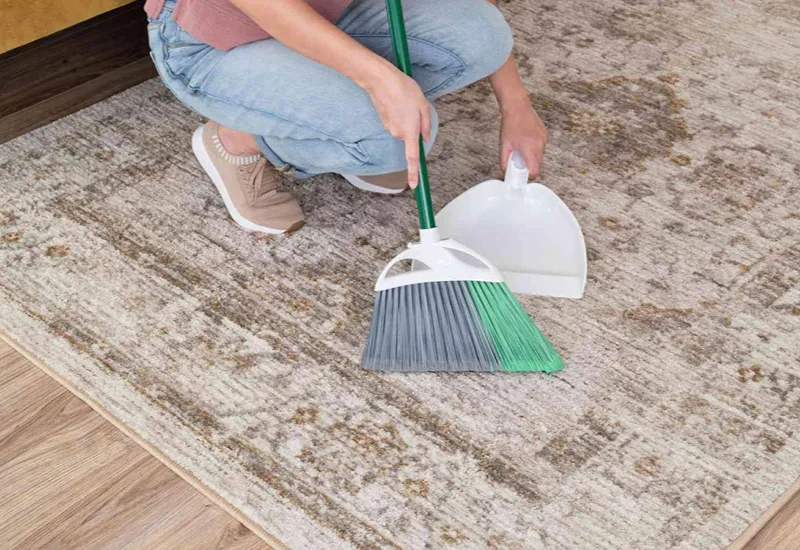
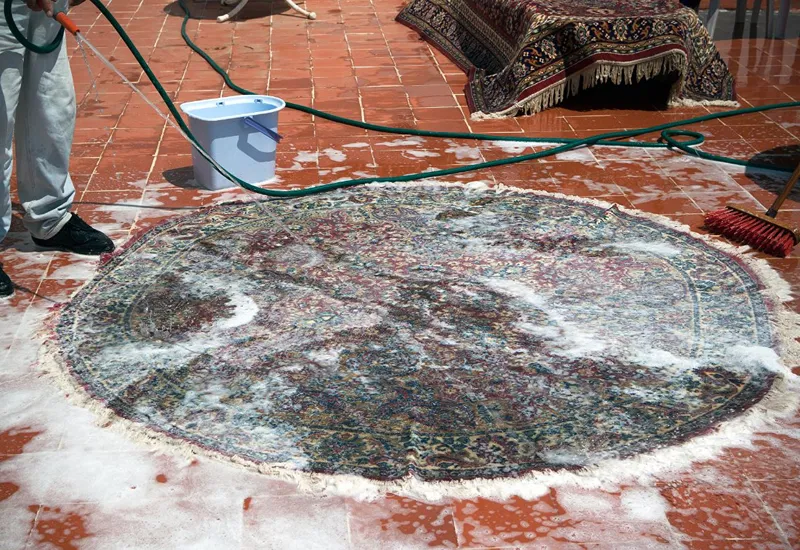
A rug that gets regular vacuuming and prompt spot-cleaning does not need a full deep-clean more than once every twelve to eighteen months — and a Persian, silk, or vintage rug should never be deep-cleaned at home at all. The method below is safe for synthetic rugs, cotton flatweaves, and most shaggy rugs. If your rug falls into the “spot-clean only” or “never DIY” rows of the matrix in Section 1, skip this section and book a professional instead.
Pick the right day
In Dubai, the right day for deep-cleaning a rug is not the hottest summer day and not a humid day. Choose a day between November and March when the humidity is below 50 percent, when there is no shamal forecast, and when you can leave windows open or the AC running for at least eight hours. A rug that stays damp for more than 24 hours in this climate will start to smell, and beyond 48 hours it will grow mould — a problem we cover in detail in our guide on preventing carpet mould. Plan to start early in the morning so the rug has the full day to dry.
What you need
A vacuum, a soft-bristle brush, a bucket, mild dishwashing liquid or a dedicated wool-safe rug shampoo (pH neutral, no bleach, no enzymes), white vinegar, clean white towels, and a squeegee with a rubber blade. Optionally, a wet/dry vacuum cleaner makes the job dramatically easier and is worth renting for the day if you do not own one. Avoid ordinary carpet shampoos designed for wall-to-wall carpet — they are too harsh for most rugs and leave a residue that attracts dirt.
The seven-step method
Step 1 — Vacuum thoroughly. Vacuum the front, then the back, then the front again. This removes the dry soil that would otherwise turn to mud the moment you add water.
Step 2 — Test for colourfastness. Dab a small hidden corner with your cleaning solution on a white cloth. If any colour transfers to the cloth, stop — this rug is not safe to wet-clean at home.
Step 3 — Mix the cleaning solution. One teaspoon of mild dishwashing liquid or rug shampoo in a litre of cool water. Add a tablespoon of white vinegar for wool rugs; it helps stabilise the dyes. Never use hot water.
Step 4 — Work in small sections. Dip the soft brush in the solution, shake off the excess, and work the foam gently into the pile in the direction of the nap. Do not soak the rug — you want foam on the surface, not water pooling through to the backing.
Step 5 — Rinse. Dampen a clean towel in plain cool water, wring it out until barely damp, and blot the section to lift the dirty foam. Change the rinse towel frequently. A wet/dry vacuum is even better here — run it over the section to extract the dirty water.
Step 6 — Squeegee out excess water. Use the rubber-blade squeegee in the direction of the pile to push out as much water as possible. Repeat until no more water is being extracted.
Step 7 — Dry flat, then elevated. Lay the rug flat on a clean dry surface (towels or a clean tarp) for the first hour, then roll it loosely in dry towels to absorb more moisture. Finally, hang the rug over a railing or line with the pile facing out, and leave it until completely dry to the touch — typically 8 to 24 hours depending on humidity and airflow.
What not to do during a deep clean
Do not soak the rug through to the backing. Do not use hot water. Do not use a steam cleaner on the rug while it is lying flat. Do not walk on the rug while it is damp. Do not roll a damp rug and store it — mould will form within 48 hours. Do not dry a wool rug in direct sun, which can shrink and fade it; dry it in bright shade with good airflow instead. Each of these mistakes is common, and each one ruins rugs every year in Dubai homes.
5. Dubai-Specific Challenges: Sand, Humidity, and AC
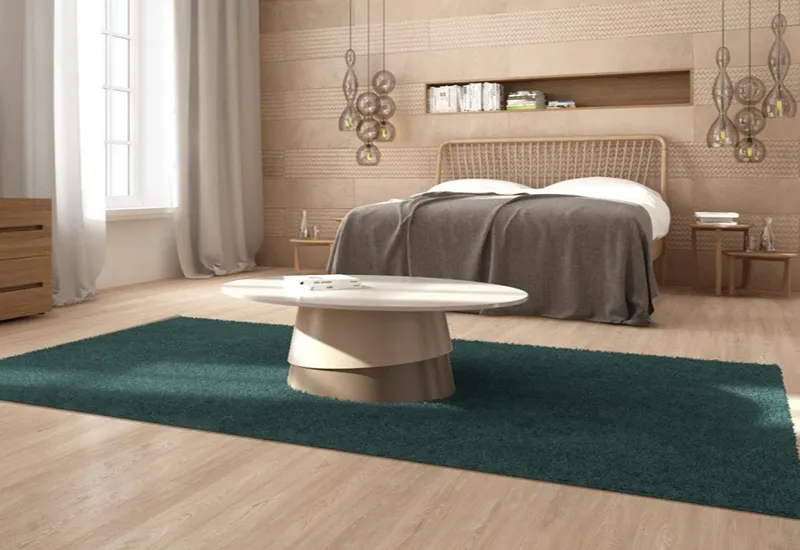
Cleaning a rug in Dubai is genuinely different from cleaning the same rug in London, Mumbai, or Riyadh. Three local factors change the rules, and ignoring them is the fastest way to ruin a rug that would otherwise last for decades.
Sand is the number one rug killer
Dubai’s airborne dust is unusually high in silica, and silica grit is sharp at a microscopic level. Once it works its way into the base of a rug’s pile, every step drives those particles against the yarn like sandpaper. This is why a rug in a Dubai apartment can look worn within two years while the same rug in a European home looks fine after five. The only defence is frequent, thorough vacuuming — weekly at minimum, more often during the dusty season — and the back-vacuum technique described in Section 2. No cleaning product compensates for inadequate sand removal.
Humidity swings between extreme dry and extreme damp
When the AC runs continuously, indoor humidity in a Dubai home can drop below 30 percent, which dries out wool fibres and makes them brittle. When the AC is off — even for a single afternoon — humidity can spike above 70 percent, and any residual moisture in a rug’s foundation becomes a mould risk. The practical implication for cleaning is that you should never deep-clean a rug during the peak summer months (July to September) unless you can keep the AC running steadily for 48 hours afterwards. The safest cleaning window in Dubai is between November and March, when natural airflow helps the rug dry evenly.
AC-cooled air hides dampness
Air conditioning dries the surface of a rug before the backing is dry, which tricks homeowners into thinking a rug is fully dry when it is not. If you press a clean dry towel against the back of a recently-cleaned rug and the towel picks up any moisture, the rug is not dry enough to put back on the floor. Wait another six hours and test again. Putting a still-damp rug back onto a marble or tile floor traps moisture between the rug and the floor, and that trapped moisture is what causes the brown discoloration at the edges of a rug that many Dubai homeowners mistake for a stain.
Hard water leaves mineral residue
Dubai’s tap water is moderately hard, and the mineral content can leave a faint chalky residue on a rug that has been over-wetted during cleaning. For a deep clean, use the minimum water the method allows, and consider using filtered water for the final rinse if your tap water is particularly hard. This is a small detail that makes a visible difference on dark-coloured rugs.
6. When Not to DIY: Rugs That Belong to a Professional

Some rugs should never be cleaned at home, no matter how confident you feel after reading this guide. The risk of permanent damage is too high, and the cost of professional cleaning is far lower than the cost of replacing a ruined rug. If your rug falls into any of the categories below, stop at the vacuum-and-blot stage and call a specialist for anything more.
- Persian, Turkish, and other hand-knotted rugs: The dyes used in traditionally-made rugs can bleed unpredictably when wet, especially the reds and blues derived from natural sources. A single drop of water in the wrong place can wick dye across the rug and leave a permanent bloom. Our Persian rug collection includes care notes for each piece, and we recommend professional cleaning for all of them.
- Silk and silk-blend rugs: Silk fibres are dramatically weaker when wet, and any agitation will damage them. Even a gentle shampoo can strip the natural sheen that gives a silk rug its value. Dry cleaning by a specialist who handles silk is the only safe option.
- Vintage and antique rugs (50+ years old): Older foundations are brittle, older dyes are less stable, and previous repairs may have used adhesives that react badly to water. Treat any rug with obvious age as you would a Persian — vacuum and blot only, and call a specialist for anything else.
- Rugs with urine, vomit, or extensive mould: These situations require extraction equipment and enzyme treatments that are simply not available to a homeowner. Attempting DIY cleaning will spread the contamination and make the eventual professional job harder and more expensive.
- Rugs larger than roughly 3 by 4 metres: A rug of this size holds an enormous amount of water once wet, cannot be moved easily when damp, and is almost impossible to dry evenly in a Dubai apartment without specialist drying equipment. Spot-clean by all means, but leave deep-cleaning to a professional who can take the rug to a properly-equipped workshop.
A reasonable rule of thumb: if the rug cost more than AED 4,000 to buy, or if it has sentimental value you cannot replace, the deep-clean is a job for a professional. The fee is typically a fraction of the rug’s value, and a specialist will spot risks you would never see coming.
Quick Reference — Cleaning a Rug at Home in Dubai
- Identify the fibre first: Synthetic or cotton → safe to deep-clean at home. Wool Persian, silk, vintage, leather → spot-clean only and call a specialist for anything else.
- Weekly: Vacuum in the direction of the pile, brush off for hand-knotted and Persian rugs, vacuum the back once a month, rotate quarterly.
- Spills: Blot, never rub. White cloth only. Outside edge inward. Then treat with the stain-specific solution in Section 3.
- Deep clean: November to March only, low-humidity day, seven-step method in Section 4, dry flat then elevated, 8 to 24 hours drying time.
- Never: Bleach, ammonia, steam cleaner on a flat rug, hot water on wool, direct sun on a damp wool rug, walking on or rolling a damp rug.
- When in doubt: Stop and call a professional. The cost of one professional clean is always lower than the cost of replacing a ruined rug.
7. Next Steps: From Reading This Guide to a Clean Rug
If you have read this far, you now know which of your rugs you can confidently clean at home and which ones are better left to a specialist. The fastest way to lock in the right approach is to identify your rug type, gather the few tools you need, and start with the weekly maintenance routine in Section 2 — because 80 percent of rug longevity in Dubai comes down to sand removal, not deep cleaning.
Step 1 — Decide which approach each rug needs
Walk through your home and assign each rug to one of three categories: DIY-deep-cleanable (synthetic, cotton, shaggy), spot-clean-only (Persian, handmade, leather, vintage), or professional-only (silk, antique, very large, or contaminated). The matrix in Section 1 is your reference. If you are unsure about a specific rug, that is exactly the kind of question our team answers every day.
Step 2 — Browse rug-specific care notes
If you own — or are considering buying — a rug from us, the product pages include fibre and care notes that take the guesswork out of cleaning. Start with the Persian rug, handmade rugs, and shaggy rugs pages, and browse the full shop for everything else in stock. For broader care guidance, our posts on extending the lifespan of your carpet and preventing carpet mould cover the same principles for wall-to-wall carpets and are useful companion reading.
Step 3 — Book a professional clean when needed
For any rug in the spot-clean-only or professional-only categories, or for a rug you have spot-cleaned and are not satisfied with, the next step is a professional clean. Use the contact page to request a free assessment anywhere in Dubai or the wider UAE, or call our team directly. We will identify the fibre, assess the dyes for colourfastness, and recommend either an in-home treatment or a workshop clean — with a written quote before any work begins. A typical assessment visit takes 20 to 30 minutes and surfaces issues (fragile foundations, previous repairs, hidden stains) that no online guide can predict.
Whatever you do, do not put off cleaning indefinitely. A rug that is genuinely dirty is not just an aesthetic problem — it is a textile being slowly destroyed from the inside by grit, oils, and moisture. A clean rug lasts longer, looks better, and feels softer underfoot. In a Dubai home, that difference is visible within a single cleaning cycle. — Editor, carpetdubai.ae/blog/