To remove mildew from a carpet or rug, start by fixing the moisture source, checking the carpet backing and underlay, and deciding whether the affected material can be cleaned safely. A recently damp carpet with no visible mould can often be cleaned and dried. However, a carpet with established mould growth may require professional treatment or replacement.
Unlike hard flooring, carpets and rugs have absorbent fibres, backing materials, and sometimes thick underlays. Moisture and fungal growth can spread into these layers, making surface cleaning insufficient. Vinegar, baking soda, or ordinary carpet shampoo cannot guarantee complete mould removal.
This guide explains how to identify possible mildew, handle minor moisture problems, choose appropriate cleaning methods for different rug fibres, and prevent mould from returning in Dubai homes.
What Is Mildew on a Carpet?
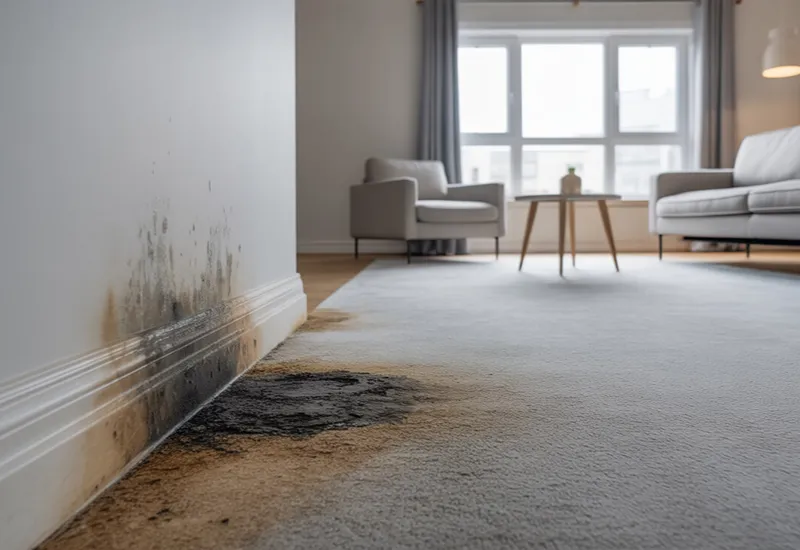
Mildew is a term commonly used to describe certain types of fungal growth, often found on damp surfaces. Mould can also develop within carpet fibres, rug backings, and underlays when moisture remains trapped.
Fungal growth may appear white, grey, green, brown, or black. Colour alone cannot identify the type of mould or determine how deeply it has spread. A pale patch is not necessarily harmless, and a dark patch does not automatically mean extensive damage.
In Dubai homes, common moisture sources include:
- Leaking AC units or blocked condensate drain pipes
- Spills that soak through the carpet without drying properly
- Damp concrete floors beneath fitted carpets
- Water entering through windows or balcony doors
- High indoor humidity in poorly ventilated rooms
The first step is always to identify and correct the moisture problem. Cleaning the surface without addressing the cause allows the problem to return.
Signs of Mildew in a Carpet or Rug
Mildew and mould problems are not always visible immediately. Watch for these warning signs:
- A persistent musty or earthy smell
- White, grey, green, brown, or black patches on carpet fibres
- Unexplained discolouration or staining
- Dampness beneath a rug or carpet
- Moisture around the carpet edges or skirting boards
- A musty smell that returns after the carpet has been cleaned
For removable rugs, inspect the underside when it is safe to do so. Check the floor beneath for moisture, staining, or an unusual smell.
With wall-to-wall carpets, the underlay may retain moisture even when the upper pile appears dry. Avoid lifting or disturbing extensively mouldy carpet yourself, as this can release particles into the air.
Important: A musty smell or stain can suggest a moisture problem, but it does not confirm the type or extent of mould. Professional inspection may be necessary when the cause is unclear.
Can the Carpet Be Saved? Check the Extent of the Damage

Not every damp carpet needs replacement. The decision depends on how long the material has been wet, whether mould is present, and which layers are affected.
| Carpet condition | What it may indicate | Recommended action |
| Recently damp, with no visible mould | A spill or moisture problem caught early | Remove moisture and dry promptly |
| Small, ordinary surface stain with no signs of mould | Dirt or residue from a spill | Follow the manufacturer’s cleaning instructions |
| Musty smell that persists after drying | Possible hidden moisture or mould | Arrange a professional inspection |
| Visible mould on carpet fibres | Possible fungal contamination | Seek specialist advice before attempting cleaning |
| Mould or persistent dampness in the backing or underlay | Contamination beneath the surface | Professional remediation and possible replacement |
| Extensive mould growth or sewage-related water damage | Significant contamination | Arrange professional remediation; disposal may be necessary |
According to theUS Environmental Protection Agency (EPA), porous materials such as carpets can be difficult or impossible to clean completely once mould has developed within them.
As a general guideline, the EPA recommends considering professional assistance when mould covers more than approximately 10 square feet (0.9 square metres), when there is substantial water damage, or when contaminated water is involved. Even a smaller mouldy carpet may require replacement because of its absorbent construction.
Safety Before You Start
Handling mouldy materials can expose you to airborne particles. Take appropriate precautions before attempting any cleaning or moving affected items.
- Wear a properly fitted N95 respirator, protective gloves, and enclosed safety goggles when handling mouldy materials.
- Keep children, pets, and other occupants away from the affected area.
- People with asthma, significant allergies, immune suppression, or underlying lung disease should not undertake mould cleanup.
- Do not dry-brush, beat, shake, or use an ordinary household vacuum on visibly mouldy carpet.
- Avoid directing fans at untreated mould growth, as this may spread contaminated particles.
- Do not mix bleach with vinegar, ammonia, or other cleaning products.
- Avoid applying bleach to carpets and rugs, especially wool or other delicate fibres.
If mould is extensive, the carpet has been contaminated by sewage, or the HVAC system may be affected, contact a qualified professional.
For additional safety guidance, refer to theCDC’s Mould Cleanup Recommendations.
What You Need
For a recently damp carpet or a small ordinary stain without visible mould, prepare the following:
- Clean, absorbent white cloths
- A suitable carpet cleaner or mild detergent approved for the material
- Clean water, if permitted by the care instructions
- A wet-extraction vacuum, where appropriate
- A fan or dehumidifier for safe drying
- An indoor humidity meter
- Protective gloves
For suspected mould contamination, the required equipment and removal methods depend on the extent of the problem. Professional cleaners and remediation specialists may use specialised extraction equipment, HEPA-filtered vacuums, protective equipment, and controlled drying procedures.
Avoid relying on vinegar or baking soda as mould-removal treatments. Baking soda may help with ordinary odours, but it cannot establish that fungal growth has been removed from carpet fibres or backing.
How to Remove Mildew from a Rug: Step by Step
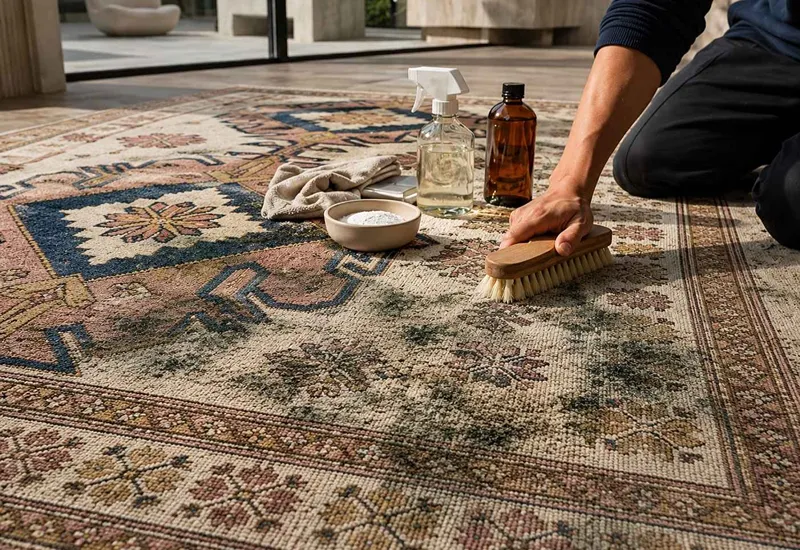
The steps below explain how to respond safely to a moisture problem and determine the appropriate cleaning approach. They are intended for minor, clean-water incidents and routine cleaning where established mould has not been identified.
Step 1: Find and Fix the Source of Dampness
Check around AC units, windows, bathroom entrances, water pipes, and the floor beneath the rug.
If water is still entering the area, cleaning will not solve the problem. Repair the leak, stop condensation from collecting, or address any moisture trapped beneath the flooring.
In Dubai, pay particular attention to blocked AC drainage lines and damp areas near exterior walls.
Step 2: Inspect the Carpet and Surrounding Floor
Determine whether the carpet is simply wet or shows possible mould contamination.
Check how long it has been damp, whether there are visible patches, and whether the backing or underlying floor is affected.
A small spill of clean water caught promptly is different from a carpet that has remained wet for several days.
If the backing or underlay is visibly mouldy, or if the carpet has been affected by contaminated water, stop and seek professional advice.
Step 3: Prepare the Area Safely
For a recently damp rug without suspected mould, move furniture away and allow access to the wet area.
If the rug is small and safe to handle, it can be moved to a suitable clean, dry location. Avoid dragging valuable rugs or exposing delicate fibres to prolonged direct sunlight.
During humid Dubai weather, air-conditioned indoor drying may be more effective than leaving the rug outside.
If mould is visible or suspected, avoid shaking the rug or moving it through occupied rooms without appropriate precautions.
Step 4: Remove Excess Moisture
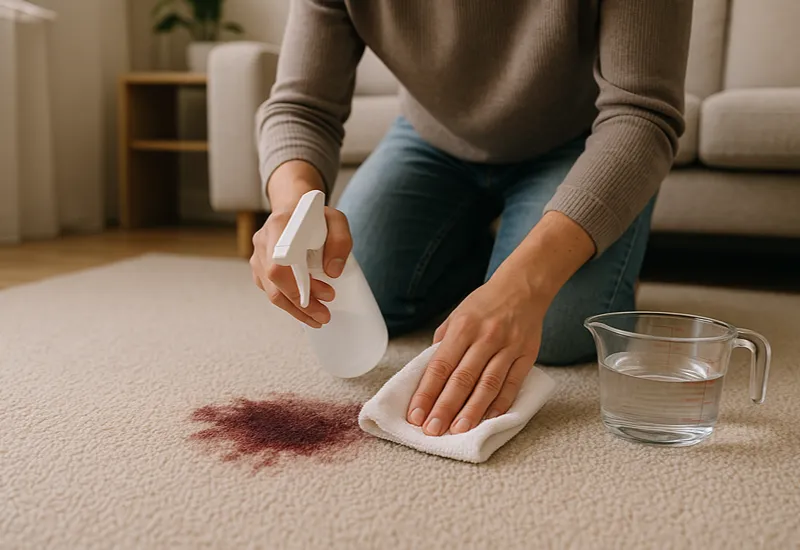
For a fresh spill or clean-water incident without visible mould, blot the affected carpet with clean white cloths.
Press gently to absorb moisture instead of rubbing the fibres.
Where the carpet construction permits, a suitable wet-extraction vacuum can remove additional water.
Do not continue soaking or scrubbing the carpet. Excessive moisture can penetrate the backing and prolong drying.
Step 5: Test an Appropriate Carpet Cleaner
For a remaining ordinary stain without evidence of mould, choose a cleaning product recommended for the carpet fibre.
Test it on a hidden area first and check for colour transfer, shrinkage, or changes in texture.
Use only the amount directed by the product label. Avoid mixing cleaning products.
Do not assume that a vinegar-and-water spray will remove established mould. Surface treatment cannot reliably address fungal contamination inside porous carpet materials.
Step 6: Clean According to the Rug’s Care Instructions
Apply the approved cleaning method only when the carpet is suitable for routine home cleaning.
For example, some small cotton rugs may be machine washable, while other rugs require controlled professional cleaning.
Blot away remaining residue where appropriate, and avoid leaving detergent or excess moisture in the fibres.
If you discover visible mould, a persistent musty smell, or contamination in the backing, stop routine cleaning and arrange a professional assessment.
Step 7: Dry the Carpet Completely
Dry the carpet, backing, padding, and underlying floor as quickly as possible.
For clean-water damage without established mould, a dehumidifier, suitable airflow, and professional water extraction can help.
Use AC dry mode where appropriate, provided the AC system itself is not suspected of mould contamination.
Avoid placing the rug back on the floor or returning furniture before all affected layers are dry.
Step 8: Inspect the Carpet Before Reusing It
Once drying is complete, examine the carpet and surrounding area again.
Check for:
- Remaining moisture beneath the rug
- Persistent musty odours
- New or recurring discolouration
- Damp carpet backing or underlay
- Continued moisture from the original source
If the smell or suspected growth remains, further surface cleaning is not necessarily the answer. Professional remediation or replacement may be required.
How to Treat Mildew by Rug Fibre
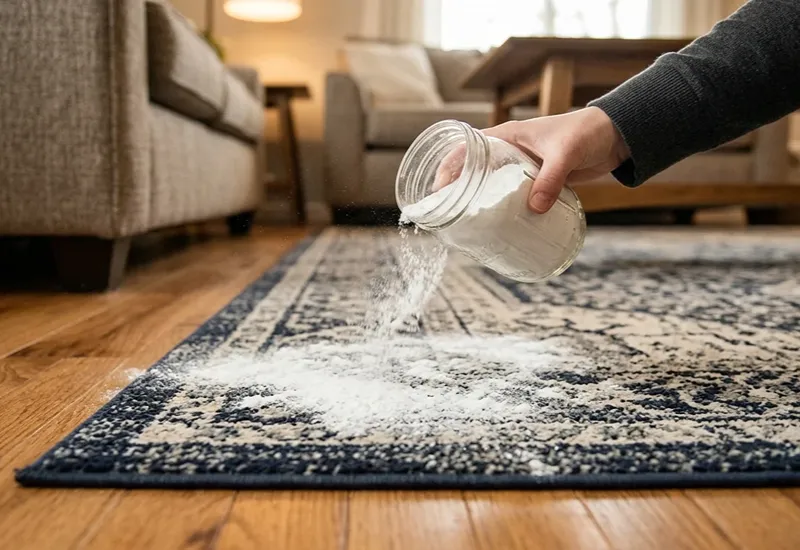
Different carpet and rug fibres require different cleaning methods. The following guidance helps with moisture care and determining when specialist treatment is appropriate.
| Rug fibre | Recommended approach | What to avoid |
| Synthetic: polypropylene, polyester, nylon | Dry promptly after clean-water exposure; use manufacturer-approved cleaning methods for ordinary stains | Assuming synthetic fibres make the backing mould-proof |
| Wool | Use wool-compatible cleaning products for ordinary stains; consult a specialist for suspected mould | Excessive water, hot water, harsh chemicals, aggressive scrubbing |
| Cotton | Follow the care label; some small rugs can be washed if suitable | Machine washing without checking construction and dye stability |
| Silk | Seek specialist cleaning and conservation advice | Home wet cleaning, strong chemicals, vigorous brushing |
| Sisal, jute, and seagrass | Prevent excess moisture and obtain specialist advice when mould is suspected | Soaking, excessive spraying, prolonged dampness |
The material is only one consideration. Rug backing, dyes, adhesives, and construction also affect how a rug should be cleaned.
For more fibre-specific guidance, readHow to Clean a Sisal Area Rug andHow to Get a Stain Out of a Wool Rug.
For valuable Persian, hand-knotted, antique, or silk rugs, professional assessment is especially important before any wet-cleaning treatment.
How to Remove Mildew from Wall-to-Wall Carpet
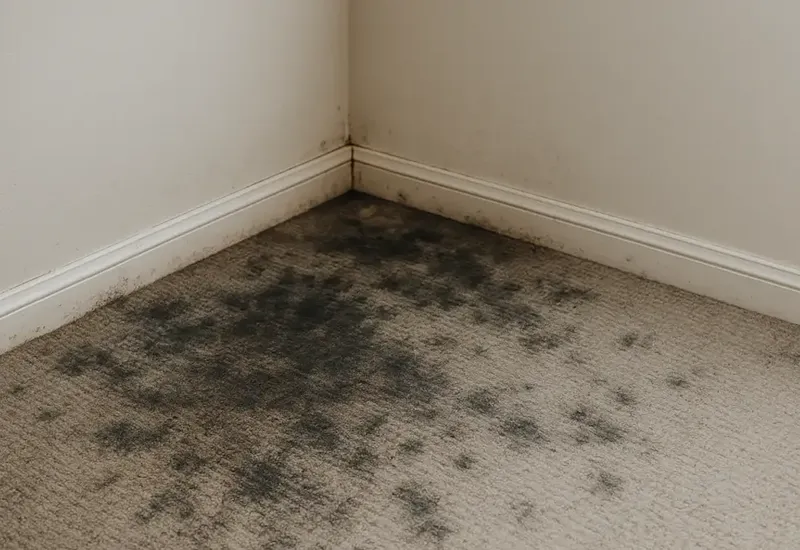
Wall-to-wall carpet presents additional challenges because moisture may become trapped between the carpet backing, underlay, and floor.
If the carpet has recently become wet from clean water, prompt extraction and controlled drying may prevent further damage.
However, if mould is suspected, the underlying materials need careful assessment.
- Carpet pile: Visible contamination may require specialist treatment or replacement.
- Carpet backing: Mould can penetrate layers that surface cleaning cannot reach.
- Underlay: Wet or mould-contaminated padding frequently requires removal and replacement.
- Floor beneath: Concrete or other subfloor materials must be assessed, cleaned as appropriate, and thoroughly dried before new flooring is installed.
Avoid lifting a heavily contaminated fitted carpet without suitable protective measures and containment.
When replacement is necessary, installing new carpet before the floor and moisture source have been addressed risks repeating the same problem.
How to Dry a Carpet Properly in Dubai
Proper drying is essential for preventing mould growth after spills and leaks.
The EPA advises drying wet materials within 24 to 48 hours wherever possible. This is a prevention guideline, not a guarantee that mould cannot develop sooner.
For recently wet carpets affected by clean water:
- Extract as much water as possible using an appropriate method.
- Use a dehumidifier to reduce excess indoor moisture.
- Run AC dry mode if the system is clean and operating normally.
- Allow air to circulate around the carpet during drying.
- Check that the backing, underlay, and floor are also dry.
- Avoid exposing delicate rugs to strong direct sunlight for extended periods.
During humid months in Dubai, leaving windows open may increase indoor moisture. An indoor humidity meter can help determine whether outdoor ventilation or dehumidification is more appropriate.
Do not use fans to blow across untreated visible mould or potentially contaminated materials. Where mould is present, drying should be incorporated into an appropriate remediation plan.
Thick carpets and underlays can remain damp even when the surface feels dry. Professional moisture testing may be needed after significant water damage.
How to Stop Mildew Coming Back
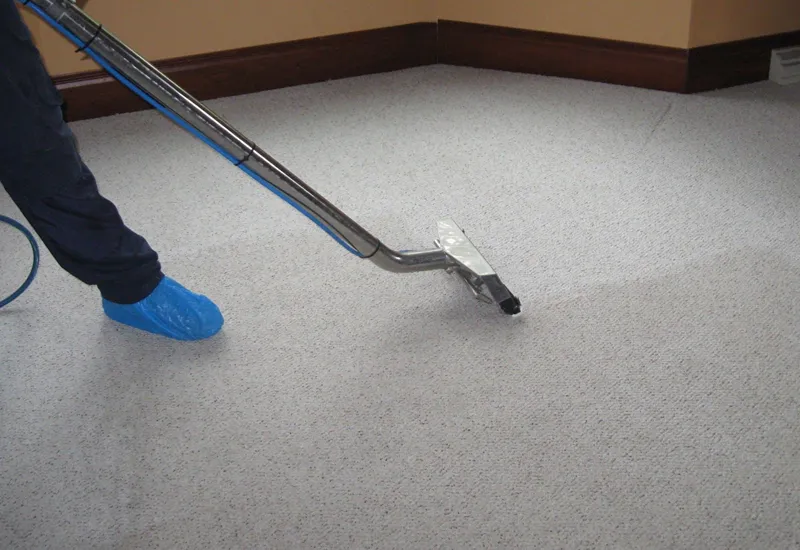
Moisture control is the most effective way to reduce recurring mould problems.
Build these habits into your carpet care routine:
- Blot spills promptly and dry the affected layers.
- Check AC condensate trays and drainage pipes regularly.
- Repair plumbing leaks and water seepage without delay.
- Use bathroom and kitchen exhaust fans to reduce indoor humidity.
- Keep indoor relative humidity below 60%, ideally around 30% to 50%.
- Check beneath rugs periodically for trapped moisture.
- Vacuum clean, dry carpets regularly using suitable equipment.
- Avoid placing rugs directly over persistently damp flooring.
- Choose rug pads compatible with the flooring and suitable for moisture management.
TheEPA’s guidance on moisture control identifies indoor humidity management, prompt leak repairs, and complete drying as important measures for limiting mould growth.
If the same area repeatedly becomes damp, investigate the building or AC system rather than repeatedly cleaning the carpet.
When to Call a Professional
Some carpet problems cannot be resolved through ordinary home cleaning.
Contact a qualified carpet-cleaning or mould-remediation professional when:
- Mould is visible on the carpet or rug backing.
- The underlay or floor beneath the carpet remains damp.
- The musty smell continues after thorough drying.
- Water damage has affected a large area.
- The carpet was exposed to sewage or contaminated floodwater.
- The rug is made from silk, fine wool, or delicate natural fibres.
- The rug is valuable, antique, or has sentimental significance.
- Someone in the household is experiencing mould-related health concerns.
A specialist can assess whether the material is suitable for cleaning, whether contamination extends into the backing, and whether replacement is necessary.
Professional treatment does not guarantee that every mould-affected rug can be restored.
For information about routine carpet maintenance, readHow Often Should You Professionally Clean Your Rug in Dubai?.
When to Replace the Rug or Carpet
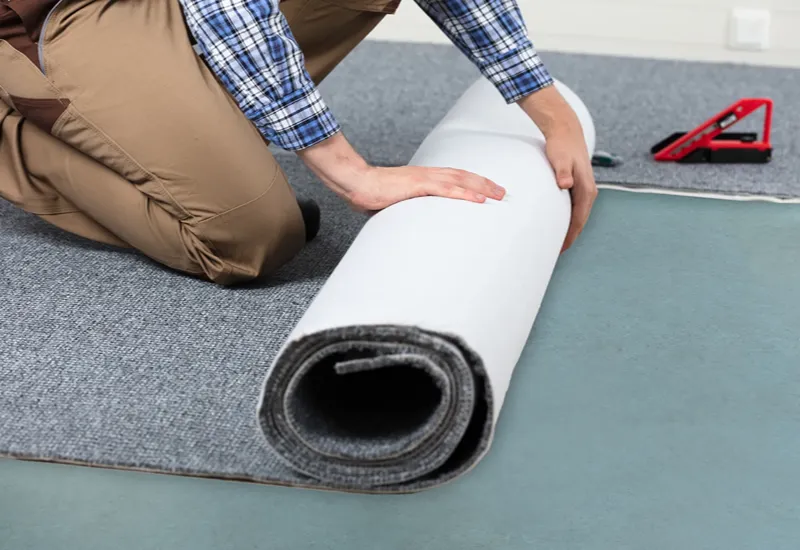
Replacement may be the safer and more practical option when mould has penetrated porous materials or the carpet has suffered extensive water damage.
Consider replacement when:
- Mould is established throughout the backing or padding.
- The carpet or rug has remained wet for an extended period and cannot be fully restored.
- Contaminated water has soaked into its fibres and underlying materials.
- Growth is extensive or repeatedly returns after appropriate remediation.
- The carpet is structurally damaged, deteriorating, or retains a persistent musty smell after professional assessment.
Do not use the colour of the mould alone to decide whether a carpet should be discarded.
For a replacement, consider the room’s moisture conditions, carpet construction, and cleaning requirements.
Synthetic materials such as polypropylene absorb relatively little moisture, but synthetic rugs are not mould-proof. Their backings and trapped dust can still support fungal growth if kept damp.
ExploreOutdoor Rugs Dubai for suitable outdoor applications,Olefin Carpet for polypropylene flooring options, andWall-to-Wall Carpets for full-room carpet installations.
For help comparing materials and choosing a suitable replacement,contact Rug Dubai.
Frequently Asked Questions
Does vinegar kill mildew on carpet?
Vinegar is sometimes used as a household cleaner, but it is not a reliable solution for removing established mould from carpet backing or underlay. Porous materials can retain contamination beyond the reach of a surface spray. Have visibly mouldy carpet assessed rather than relying on vinegar alone.
Is mildew in a carpet harmful?
Exposure to mould and fungal particles can cause irritation or allergic symptoms in some people, particularly those with asthma or other respiratory conditions. People with immune suppression or underlying lung disease may face additional risks. Avoid disturbing suspected mould and seek appropriate advice if health concerns arise.
Can a mouldy carpet be saved?
Sometimes. A recently damp carpet may be saved through prompt extraction and thorough drying before significant growth develops. Once mould has spread into the backing or underlay, professional remediation or replacement may be necessary. The decision depends on the material and extent of contamination.
What is the difference between mildew and mould?
Mildew is a common term for certain types of surface fungal growth, while mould is a broader term for fungi that can grow on damp materials. Colour and appearance alone cannot reliably establish the type of growth or how deeply it has penetrated carpet fibres.
How long does mildew take to grow on a wet carpet?
Mould may begin developing within 24 to 48 hours under suitable moisture conditions. The exact timing varies depending on temperature, humidity, materials, and contamination. Dry clean-water spills as quickly as possible and check the carpet backing and underlay for trapped moisture.
Quick Recap
If you notice dampness, a musty smell, or suspected mildew on a carpet or rug, follow these priorities:
- Find and repair the moisture source.
- Check the carpet, backing, and surrounding floor.
- Distinguish a recent clean-water spill from suspected mould contamination.
- Avoid brushing, shaking, or vacuuming visible mould with ordinary equipment.
- Use approved cleaning methods only when routine home cleaning is appropriate.
- Dry wet, uncontaminated carpet and underlying materials promptly.
- Seek professional help for visible mould, persistent odours, or affected underlay.
- Replace materials that cannot be cleaned and restored safely.
The most important step is moisture control. Prompt drying can prevent many carpet problems, but established mould may require specialist treatment or replacement.
With regular inspections, proper humidity management, and fibre-appropriate maintenance, you can keep carpets and rugs in better condition throughout Dubai’s humid months.